Chimney Sweep & Cleaning
Professional chimney sweeping removes dangerous creosote buildup, soot, and debris to keep your fireplace burning safely and efficiently.
Precision Chimney Diagnostics. Documented Results.
CSIA-Certified technicians delivering documented combustion analysis reports.
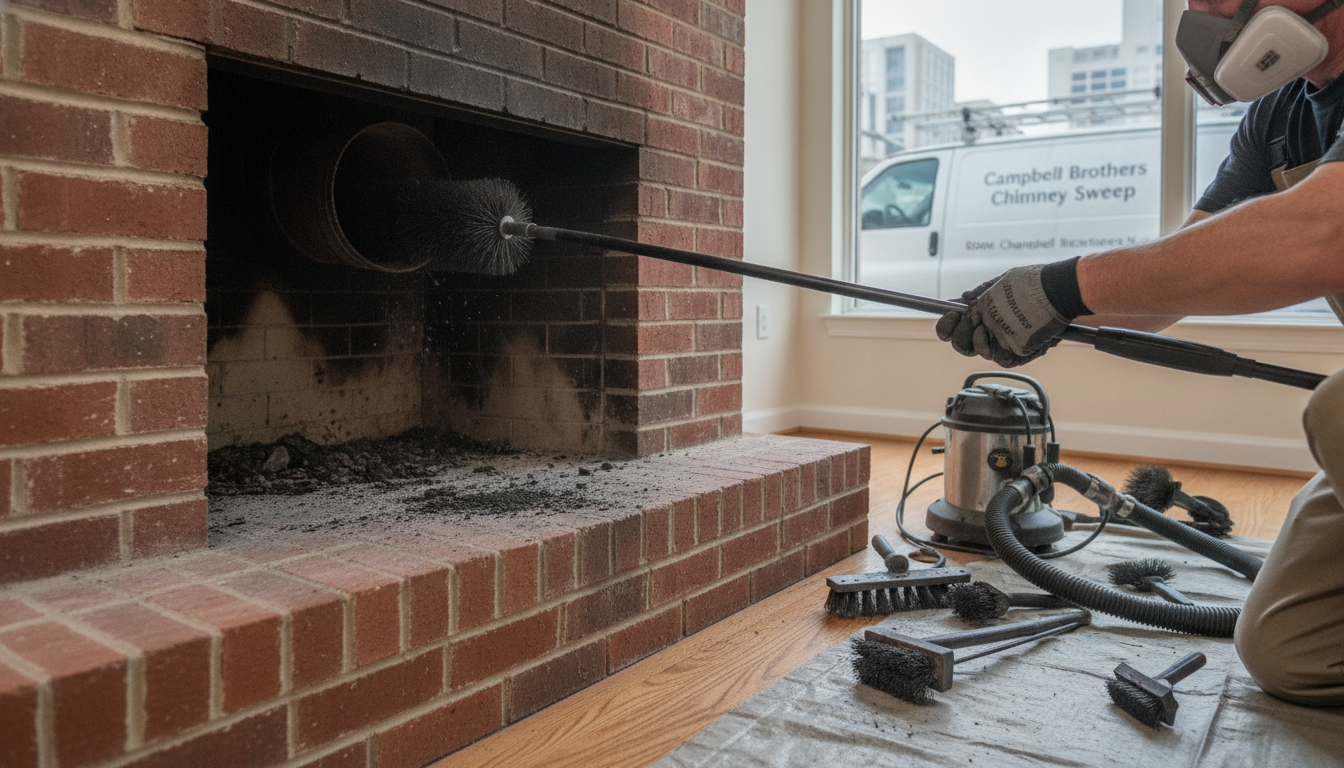
When your fireplace is in use, the last thing you want is a chimney system you can't trust. Campbell Brothers Chimney Sweep is Charlotte, NC's go-to team for professional chimney sweeping, inspection, repair, and dryer vent cleaning. We serve homeowners throughout Mecklenburg County, Union County, Gaston County, Cabarrus County, and dozens of surrounding communities — bringing certified-standard chimney care right to your door, seven days a week. Whether you're preparing for your first fire of the season, buying or selling a home, or dealing with a damaged crown or failed flashing, we have the skills and equipment to handle it efficiently and affordably. Your family's safety starts with a clean, structurally sound chimney — and that's exactly what we deliver.
Trusted by homeowners across Charlotte, NC
A Level 2 inspection per NFPA 211 is required any time a property changes ownership, following any event that may have damaged the chimney system (chimney fire, seismic activity, or building modification), or when connecting a new appliance. It includes all Level 1 visual checks plus accessible interior surfaces of the flue, with documentation of liner condition, clearances, and system configuration. Campbell Brothers delivers full written findings for every Level 2 inspection.
Draft is measured as negative pressure differential between the interior flue and the exterior atmosphere, expressed in Pascals or inches of water column. Insufficient draft can result in combustion gas spillage, incomplete combustion, and carbon monoxide risk. Excessive draft can reduce appliance efficiency and accelerate liner erosion. We document baseline draft readings and compare them against manufacturer-specified operating ranges for your connected appliance.
Combustion analysis measures the chemical composition of flue gases — oxygen, carbon dioxide, carbon monoxide, and stack temperature — to evaluate combustion efficiency and detect unsafe operating conditions. For chimney-vented appliances, these readings indicate whether the system is performing within specification or creating elevated CO risk. Our analysis is conducted with calibrated instruments and results are included in your written technical report.
A standard visual inspection identifies surface-level deficiencies accessible without specialized equipment. An infrared scan detects thermal anomalies that indicate heat transfer through compromised liner sections, cracked mortar joints, or missing insulation — conditions invisible to direct observation. The infrared methodology produces photographic documentation of heat signature patterns that are included in your inspection report for precise deficiency location.
Liner sizing is governed by NFPA 211 and appliance manufacturer specifications, with calculations based on BTU input rating, appliance type (gas, oil, wood-burning), flue height, and connector configuration. An undersized or oversized liner directly affects draft performance, condensation accumulation, and creosote deposition rate. We verify liner cross-sectional area against the applicable sizing table for your connected appliance as part of every technical assessment.
Prior to arrival, you'll receive a what-to-expect outline detailing the inspection sequence and estimated duration. On-site, the technician follows a structured startup checklist: exterior assessment, appliance and connection review, flue scan, combustion analysis if applicable, and cap and termination verification. Within 24 hours of the visit, you receive your written technical report with before-and-after documentation, measurement data, code compliance notation, and any recommended corrective actions with priority classification.